

Injury Management for Runners: Who to See and When
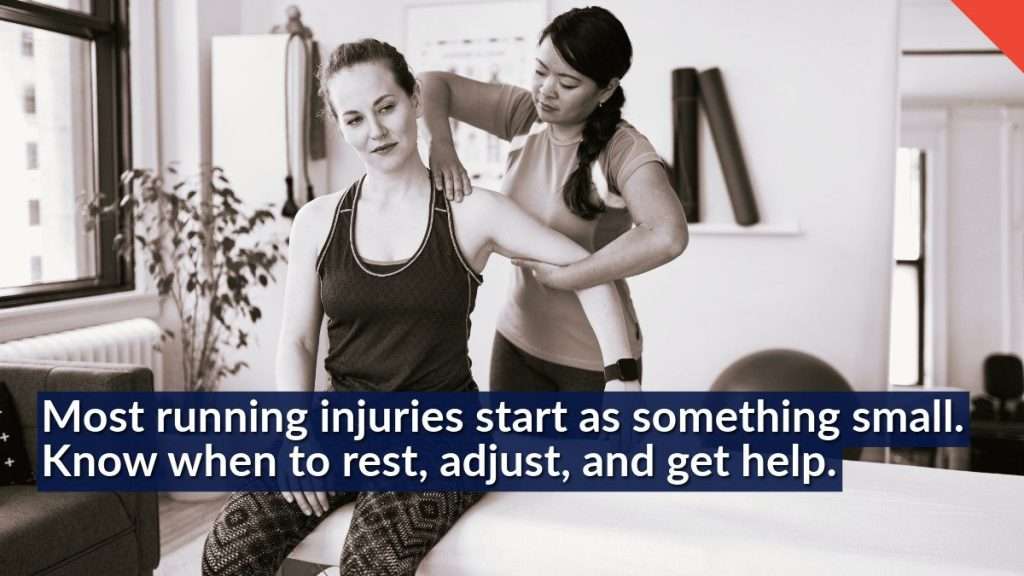
Most running injuries don’t happen overnight.
They usually build up over time, usually when your training load becomes more than your body is ready to handle. This can happen through a sudden increase in mileage, too much intensity, not enough recovery, poor strength, or simply ignoring the early warning signs.
Knowing who to see and when to see them can make the difference between managing a small niggle early and ending up with a long layoff from running.
Injury Prevention Comes First
The best place to start is always prevention.
Smart training progression, proper recovery, strength training, mobility work, sleep, and nutrition all play a vital role in helping runners stay healthy. But even when you are doing the right things, niggles can still happen. That is normal in running. What matters most is that you don’t ignore them.
Early Warning Signs Runners Should Not Ignore
It is worth getting guidance early if you notice:
- Pain that gets worse during or after a run
- Stiffness that does not settle, especially in the morning.
- Swelling, tenderness, or inflammation
- A change in your running form
- A drop in performance
- A niggle that keeps coming back
When these signs show up, the first step is usually to reduce your training load and get the right support before the problem gets worse. You also have the option of seeing a variety of specialists who can assist you. This can be confusing, but we have broken it down for you to help you make the right decision on where to start.
Most running injuries build up when training load becomes more than the body can manage. This guide helps runners understand the early warning signs, who to see for support, and how to manage niggles before they become long-term injuries.
When to See a Physiotherapist
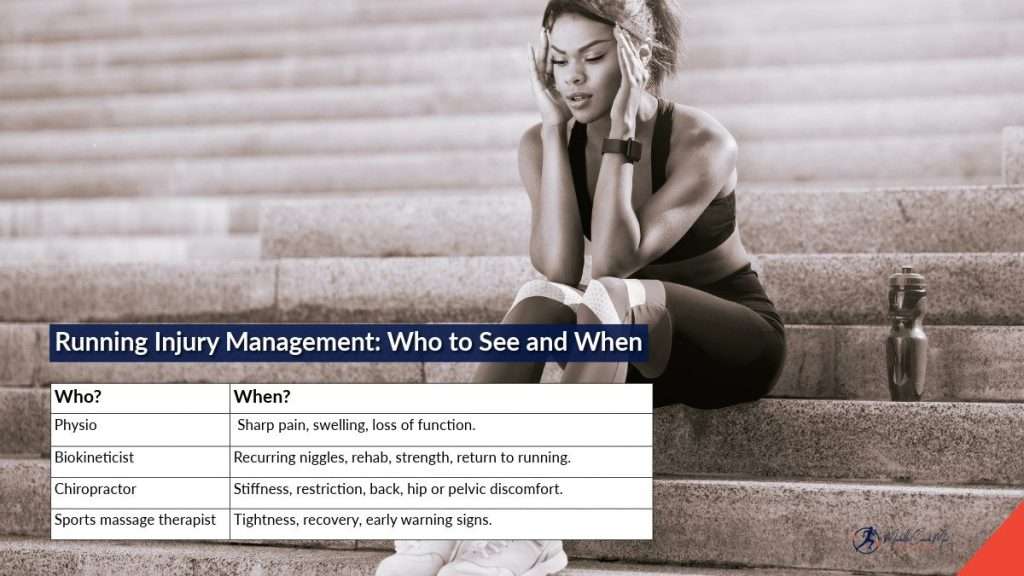
A physiotherapist, or physio, helps with pain, movement, function, and early injury management. They can assess what is injured, help calm the area down, and guide you through the first stages of recovery.
See a physio if:
- The pain is sharp, sudden, or getting worse.
- There is swelling or inflammation.
- You have lost normal movement or function.
- The pain affects walking, stairs, or daily movement.
- You are unsure whether it is safe to keep running.
A physio is often the right first step when a running injury feels acute, painful, or limiting.
When to See a Biokineticist
A biokineticist focuses on movement, strength, exercise rehabilitation and helping you rebuild capacity after injury.
Best to see a biokineticist if:
- You keep getting the same niggles.
- Pain shows up when you are tired or when you increase mileage.
- You are returning to running after an injury.
- You need structured rehab and strength work.
- You want to build a stronger body that can cope with your training.
A biokineticist helps you rebuild tissue capacity, so your body is better prepared for the demands of running.
When to See a Chiropractor
A chiropractor focuses on joint movement, mobility, biomechanics of spinal and extremity joints, and overall alignment.
A chiropractor may be helpful if:
- You feel stiff, restricted, or out of sync.
- Pain feels mechanical or movement-related.
- You have back, hip, or pelvic discomfort
- Your movement feels limited or uneven.
Chiropractic treatment can help restore movement and reduce unnecessary stress on the body. Treatment may involve the neural, muscular, and skeletal systems, depending on what’s needed for your injury.
The Role of a Sports Massage Therapist
A sports massage therapist can play a significant role in maintenance, recovery, and early detection.
They can help by:
- Reducing muscle tension and stiffness
- Supporting recovery between training sessions
- Picking up tightness, tenderness, or asymmetries early
- Flagging potential issues before they become bigger injuries.
Regular sports massage is not just about feeling good. It can help you stay one step ahead of your body and notice small changes before they become a bigger problem.
Running Injuries – It’s a Team Effort
Staying healthy as a runner works best when you have the right support around you.
- Your coach helps manage training load.
- Your biokineticist helps build strength, resilience, and return-to-running capacity.
- Your chiropractor helps improve joint function and movement.
- Your sports massage therapist supports recovery and early detection.
- Your physiotherapist or sports doctor can step in when medical assessment, diagnosis or treatment is needed.
Each person plays a different role, and together they can help you recover properly, train smarter and stay on the road for longer.

Maintenance Keeps You Running
Once the pain settles, the work is not over.
To stay healthy, keep focusing on the basics:
- Strength training twice a week.
- Regular mobility work
- Smart recovery
- Gradual training progression
- Good sleep and nutrition
- Dealing with niggles early
Running injuries are not always just bad luck. Very often, they are a load versus capacity issue. Build your capacity, manage your load, and use your support team wisely. The earlier you deal with a niggle, the easier it is to get back to running safely.


